Ultra-short picosecond pulses use a photomechanical effect to shatter pigment and stimulate collagen — targeting spots, pores, uneven tone and acne marks with short recovery.
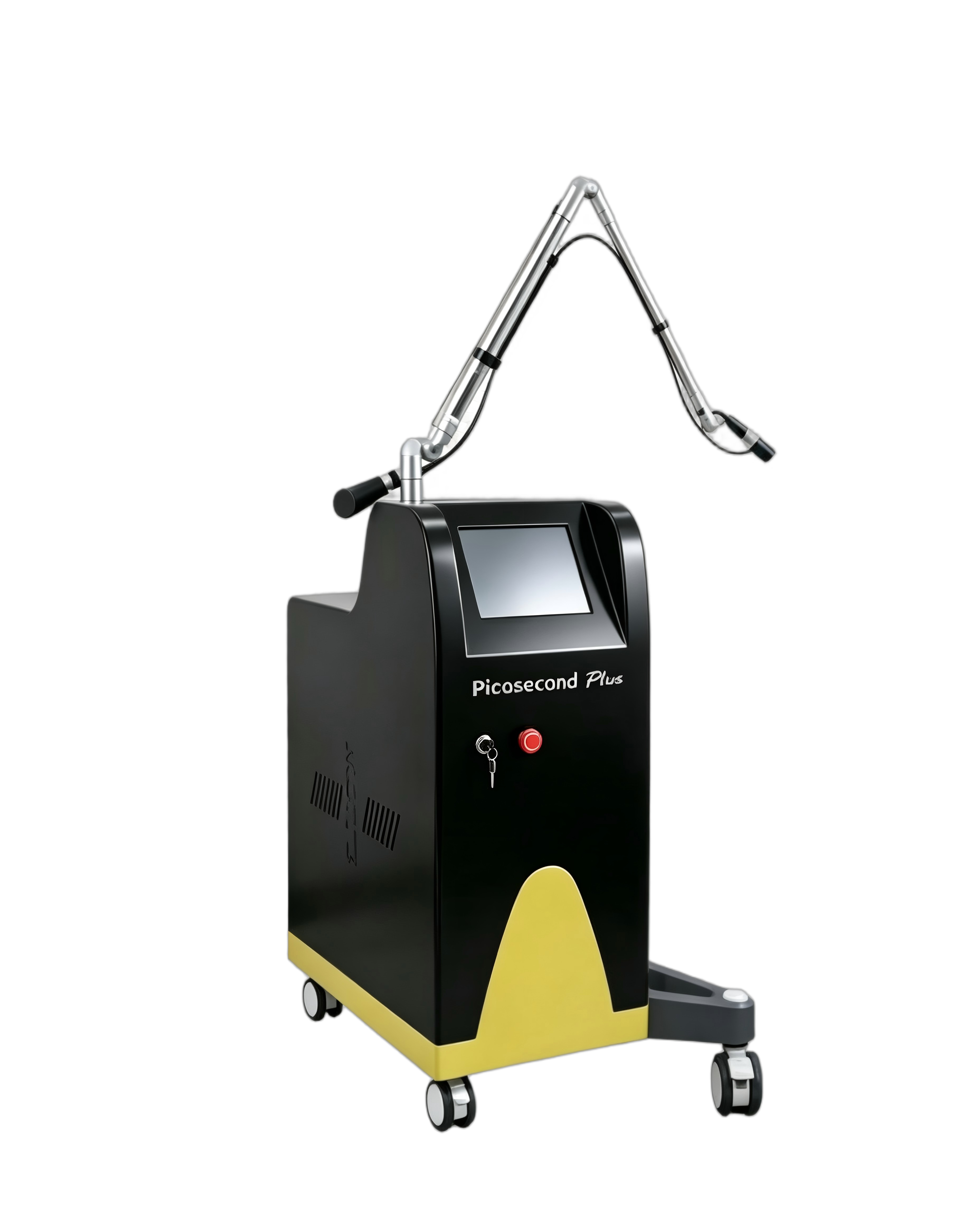
As photomedicine continues to advance, picosecond laser (Pico Laser) has become a forward-looking option for many pigmentary and skin-quality concerns. Its core advantage is an extremely short pulse duration, which can raise treatment efficiency while lowering the risk of thermal injury to surrounding tissue — a new benchmark for non-invasive skin care.
The name comes from a pulse width at the picosecond scale (10⁻¹² seconds). In that instant, laser energy produces a strong photomechanical effect rather than the photothermal effect used by conventional lasers. Target tissue — abnormal melanin clusters in the skin — is shattered into fine dust-like particles, then cleared through the lymphatic system and normal metabolism. Because heat diffusion is so brief, thermal coagulation of nearby healthy tissue is markedly reduced, supporting safety and a shorter recovery.
Picosecond laser has several main uses:
Picosecond laser is non-invasive. Before treatment, the therapist sets wavelength and energy according to skin type and lesion depth. You may feel a light snap or pinprick; topical anaesthetic is usually applied first. A full-face session typically takes about 15–30 minutes.
Short-lived redness and mild swelling in the treated area are common and usually settle within a few hours to 24 hours. Because the epidermis is largely intact, most people can resume daily activity and light makeup at once.
To support results and keep risk low, follow these points:
Before treatment
Aftercare
Picosecond pulses use a photomechanical shatter rather than heat. Shorter thermal diffusion usually means less collateral injury and faster recovery.
Freckles, sun spots, age spots, Hori’s naevus and melasma, plus pores, texture, fine lines and acne marks with a fractional tip.
A light snap or pinprick is common; topical anaesthetic is usually applied first. Full face typically takes 15–30 minutes.
Brief redness and mild swelling usually settle within hours to a day. Light makeup and daily activity are typically fine immediately.
Pause photosensitising drugs, retinoids and strong acids as advised; after treatment use SPF 50+ / PA++++ plus a hat or parasol, moisturise, avoid heat and irritants, and do not pick.