True longevity is more than a number. The core value of stem cells is extending healthspan and delaying disability.

Have we ever asked: is true longevity just a larger number on the calendar, or a longer stretch of years lived in health, independence and dignity? If umbilical cord mesenchymal stem cells (MSCs) can genuinely help older adults slow frailty, stay clear of chronic disease and delay disability, that would be more than a medical advance — it could change how we think about ageing.
Mention stem cells, and many people first think of hard-to-treat conditions such as Alzheimer’s disease, Parkinson’s disease or spinal cord injury, or even hope for a miracle that “reverses age”. A more practical direction is emerging: the core value of stem cells is not only treating disease that has already arrived, but intervening earlier and breaking the chain of ageing and chronic illness. In other words, they may not be a panacea, but they can be a new key to extending healthspan and improving quality of life in later years.
Lifespan is the total time from birth to death. Healthspan is the years lived without major disease, able to care for oneself, at a high quality of life.
WHO figures put global average healthspan at only about 62 years — nearly 10 years short of average life expectancy. Those ten years are often when chronic diseases erupt, function falls quickly, and care from others is needed — painful for the individual, and a heavy care and medical burden for families and society.
Economic models suggest that each extra year of global healthspan could save about US$38 trillion in social costs. What we want is not simply “ten more years of life”, but “ten more years of healthy, independent, dignified life”. That is the real meaning of stem-cell technology today.
What are mesenchymal stem cells (MSCs)? They come from tissues such as umbilical cord and bone marrow, can differentiate along several lineages, and secrete many active factors and exosomes. After intravenous infusion they can migrate to sites of injury, modulate immune responses and promote tissue repair and regeneration. Core mechanisms include:
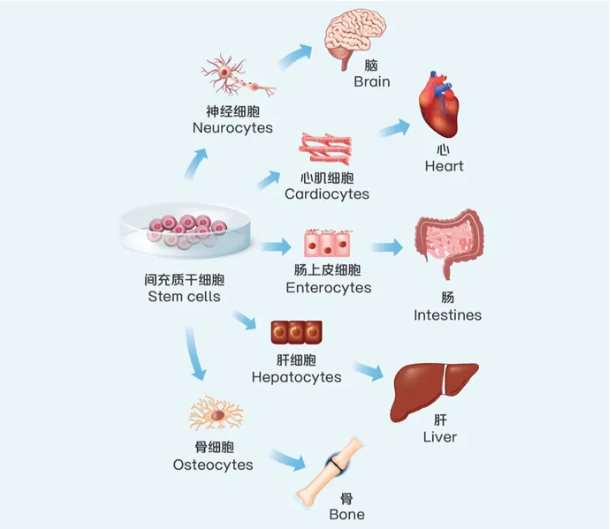

As clinical stem-cell research advances, more solid evidence is accumulating:
When stem cells truly reach clinical use, more people may still be vigorous and independent at seventy. “Retirement anxiety” will be rewritten, and an era of longevity with health at its core is arriving.
Ageing itself is not what we should fear; losing health and autonomy while we age is. An important Nature Aging paper in September 2024 pointed to ages 40 and 60 as two turning points when ageing accelerates, with declining stem-cell function as an inner mechanism.
Stem-cell therapy cannot rewrite fate, but it can win a calmer, healthier later life. The key is prevention over treatment. Especially at 40 and 60, earlier intervention and systematic health planning are what make it possible — not merely to live longer, but to live well.
Let technology serve longevity, and let longevity have quality. That day is worth looking forward to — and worth acting on, rationally, from now.
Life science and genetic technology are developing rapidly. This article is compiled from publicly available educational material, for reference only, and does not constitute medical advice. For medical questions, please consult a qualified clinician.