Poor ovarian response, premature ovarian failure, endometrial injury, PCOS and male infertility — stem-cell research is changing some fertility outcomes.
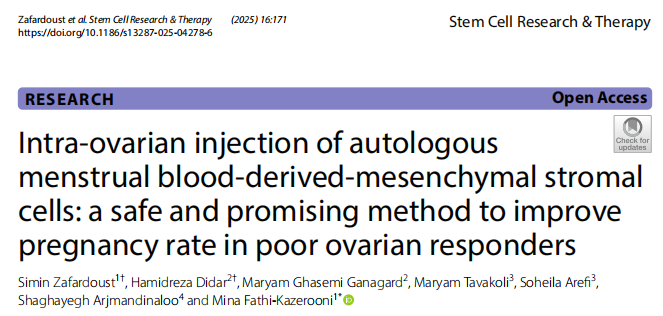
Poor ovarian response making conception difficult is troubling many women and their families. A paper in Stem Cell Research & Therapy reports that injecting mesenchymal stem cells into the ovary can change reproductive outcomes. In a study of 105 patients, stem cells enabled more than one third of the women to become pregnant.
Against a background of more than 50 million people with infertility in China, assisted reproduction is no longer so “mysterious”. The main techniques are artificial insemination (AI), gamete transfer and in vitro fertilisation (IVF). On this already hard road, some women meet a further obstacle — poor ovarian response (POR) — which sharply lowers the success of fertility treatment and brings heavy financial and psychological pressure.
Traditional options usually include growth-hormone supplements, controlled ovarian hyperstimulation, adjunctive treatment, acupuncture and intra-ovarian platelet-rich plasma (PRP). Results are modest: a meta-analysis found a natural pregnancy rate of only 7% after PRP.
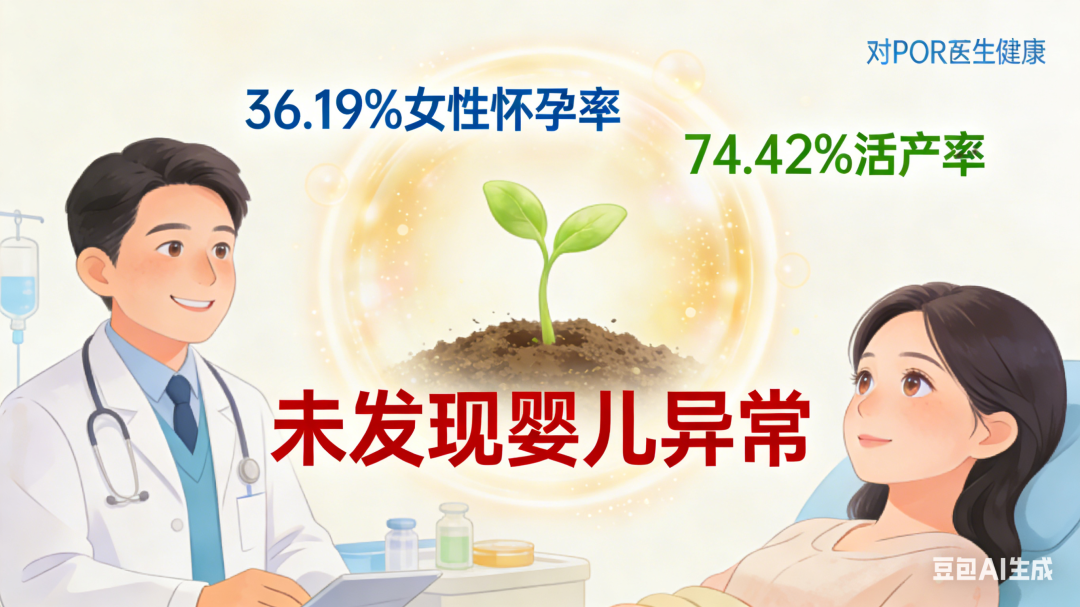
To explore a new therapy, the Avicenna Research Institute looked at pregnancy rate, live-birth rate and potential complications in 105 women with POR after intra-ovarian mesenchymal stem-cell injection (mean follow-up nearly four years). They found that the therapy enabled 36.19% of the women to become pregnant, with a live-birth rate of 74.42% per pregnancy, and no congenital anomalies or infant deaths — new hope for women stuck in POR.
Premature ovarian failure (POF), clinically called premature ovarian insufficiency, is a decline in ovarian function before age 40. It can devastate fertility, bring menopause forward and raise disease risk. To reverse this, many researchers have applied stem cells — with regenerative and immunomodulatory capacity — to POF.
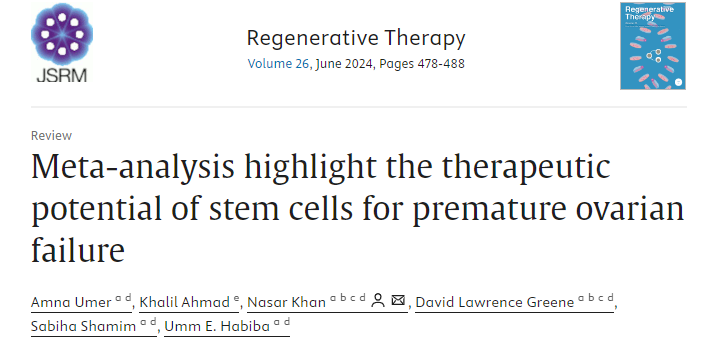
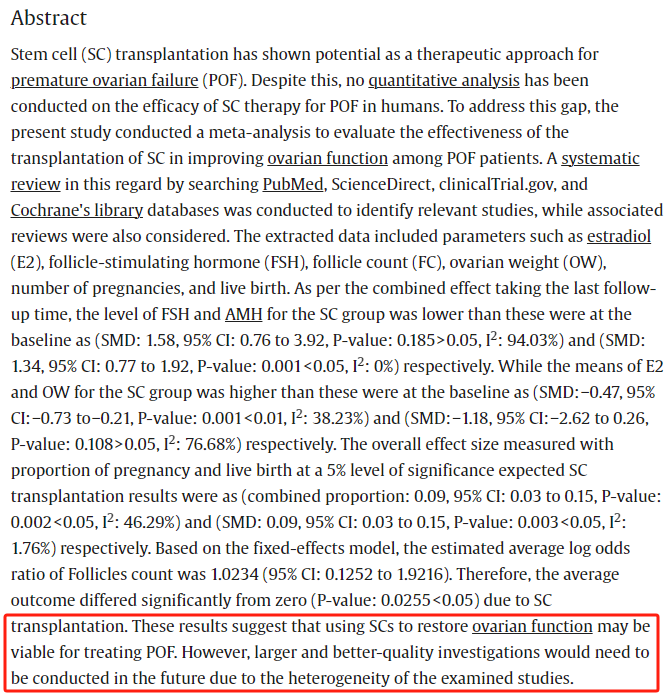
Last year, teams in the United States and Pakistan systematically reviewed past cases, covering 153 patients. They found that stem cells can improve ovarian function in POF by improving fertility, raising ovarian weight, normalising serum sex hormones (E2 and FSH) and increasing pregnancies — a promising future therapy.
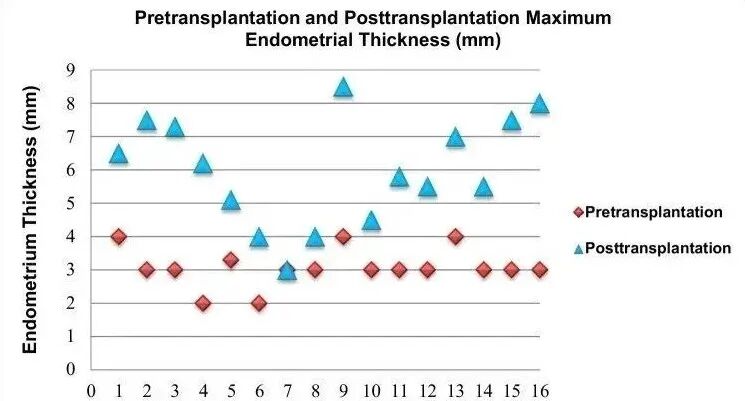
Endometrial injury is an important cause of infertility. A study using umbilical-cord mesenchymal stem cells plus conventional treatment to repair the endometrium showed that in 20 patients after stem-cell treatment, the endometrium thickened clearly and uterine-artery blood flow improved — evidence of potential for cord-blood stem cells in endometrial repair.
About three quarters of women with polycystic ovary syndrome (PCOS) have infertility. Treatment is mostly hormone replacement: it can control the condition, but clearing the fertility barrier of PCOS is not easy.
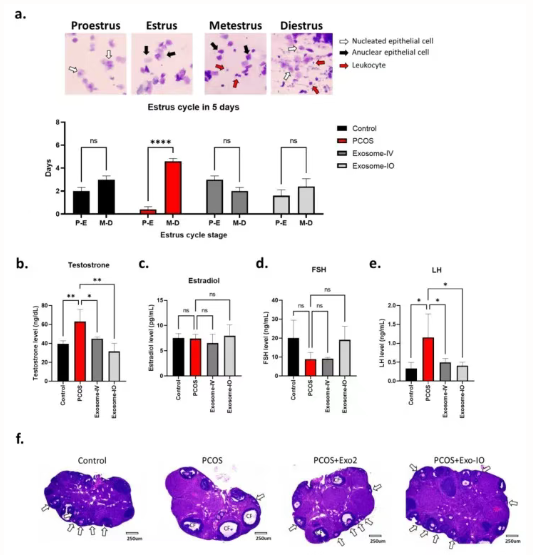
In the search for new therapies, the University of Chicago found that mesenchymal stem cells can regulate androgen production by secreting various factors and improve ovarian function. When their derived extracellular vesicles were injected into a PCOS mouse model, the mice regained fertility and produced healthy pups. This supports a therapeutic effect of MSCs in PCOS, and brings new hope to women fighting PCOS-related infertility.
Male sexual dysfunction (MSD) includes erectile dysfunction (ED), premature ejaculation (PE), orgasmic disorder and others such as Peyronie’s disease (PD). It is a common cause of male infertility.
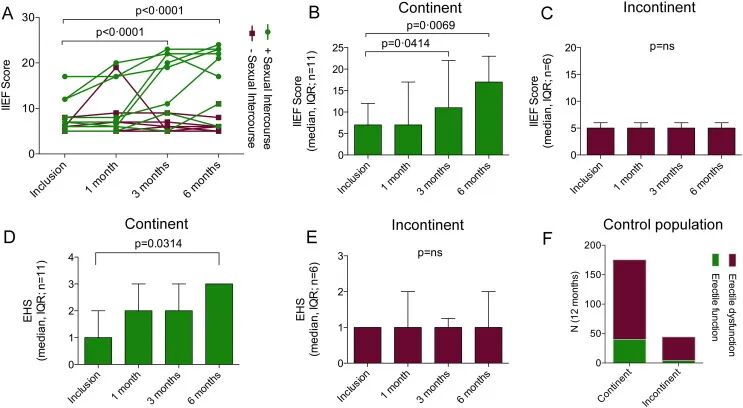
Treatment is controversial: drugs and surgery have many limits and do not improve MSD at the root. Stem-cell therapy offers a new path. In 2016 EBioMedicine published a paper on injecting autologous adipose stem cells in men with ED after radical prostatectomy. Seventeen patients took part; eight recovered erectile function and could complete sexual activity.
The most severe and difficult form of male infertility is azoospermia. Doctors usually search for sperm surgically; success is only about half. Professor Flannigan’s team hopes to help the other half who currently have “no path to fertility”.
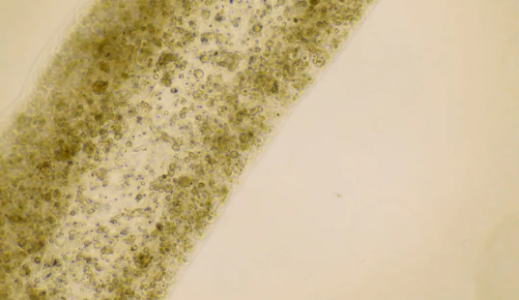
Their idea is bold: biopsy the testis of a man with azoospermia, collect and expand his stem cells in vitro, then 3D-bioprint them into tubule-like structures resembling seminiferous tubules. The cells later grew into several specialised types involved in spermatogenesis, with a marked improvement in spermatogonial stem-cell maintenance — both early signs of sperm-producing capacity.
The team is “training” these testicular cells to produce sperm — exposing them to different nutrients and growth factors, and fine-tuning the structural arrangement to promote cell–cell interaction. If normal sperm are eventually born, the “azoospermia deadlock” could be unlocked at the root, opening the door to fertility for more couples.
Worldwide, about 15% of couples have difficulty conceiving. As age at childbearing rises, so does infertility. Assisted reproduction can solve nearly 80% of cases; nearly 20% of couples still cannot conceive. In that setting, stem-cell therapy may bring hope.
Research is still early. The mechanisms by which stem cells and their derivatives restore fertility need further study, and more large clinical trials will be needed for evidence of safety and efficacy.
Life science and genetic technology are developing rapidly. This article is compiled from publicly available educational material, for reference only, and does not constitute medical advice. For medical questions, please consult a qualified clinician.