A PUMC review proposes combining MSCs with their exosomes: exosomes clear the way, stem cells rebuild — a synergistic anti-ageing strategy.
Bai Lin’s group at Peking Union Medical College published a review in Stem Cell Research & Therapy mapping MSCs and MSC-Exos in ageing and age-related disease, and proposing that stem cells be combined with exosomes.
Ageing is a gradual decline of tissue and organ function, closely tied to chronic-disease risk. Diet, exercise and drugs have extended healthspan in model organisms, but safety and efficacy still need more validation.

MSCs and their exosomes, with distinctive biology, have become a research focus in anti-ageing.
1. MSCs: self-renewal plus multilineage potential; immunomodulation and tissue repair through bioactive molecules.
2. MSC-Exos: vesicles 30–150 nm across carrying proteins and miRNA. Unlike the parent cell they are not living cells: safer, more stable, easier to use.
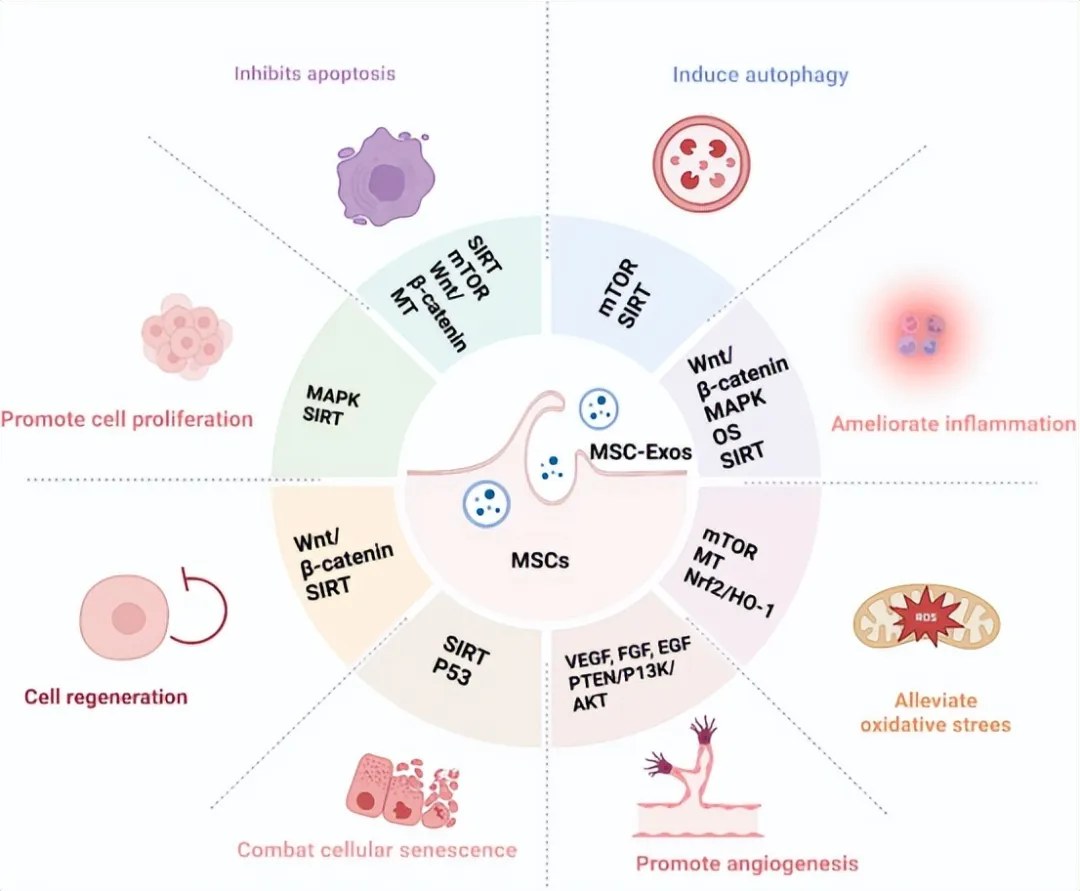
Exosomes act as a vanguard, clearing inflammation and tuning the microenvironment. Stem cells then rebuild, surviving and differentiating at a higher level. Experiments have already shown synergy.
01. Ovarian repair — signalling, mitochondrial transfer, exosomal miRNA; hormone recovery reported as high as 68%.
02. Neurodegeneration — HGF, mitochondrial transfer, exosomes suppressing neuroinflammation.
03. Vascular health — inflammatory factors down 60%; macrophages shifted towards an anti-inflammatory type.
04. Bone metabolism — osteoblast–osteoclast balance; miR-146a, related markers down 35%.
05. Skin — type III collagen up threefold; exosomes limit UV damage.
MSCs as cell therapy and their exosomes as cell-free therapy complement each other, opening a new possibility for slowing ageing and intervening in related disease.
Life science and genetic technology are developing rapidly. This article is compiled from publicly available educational material, for reference only, and does not constitute medical advice. For medical questions, please consult a qualified clinician.