Wang Jinyong’s team at CAS: iNK / CAR-iNK grown from cord-blood CD34+ haematopoietic progenitors — one cell theoretically yielding 14 million induced NK cells.

One fifth of a unit of cord blood could, in principle, yield enough “super immune cells” for thousands of patients — a stronger, cheaper path beside costly CAR-T.
A study by Wang Jinyong’s team at the Institute of Zoology, Chinese Academy of Sciences, aims to break the deadlock of high cost and hard manufacture in cancer immunotherapy.
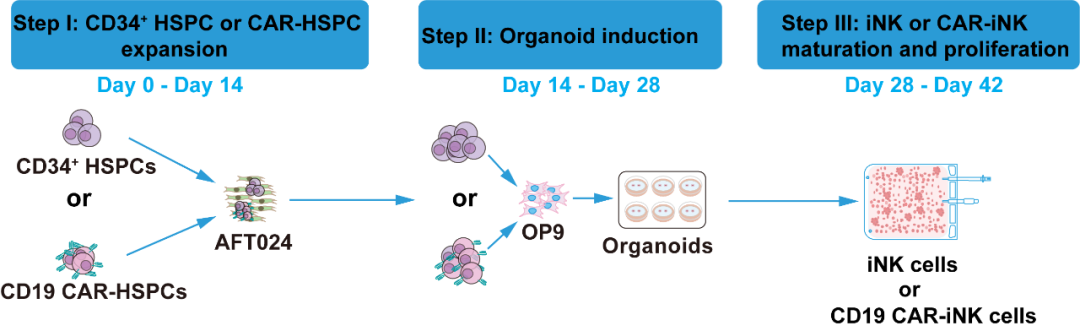
NK cells recognise and clear cancer cells by instinct. Adding a CAR guidance head produces CAR-NK therapy. Traditional manufacture from mature blood NK cells is variable, hard to expand, slow and expensive.
The raw material is cord-blood CD34+ haematopoietic stem/progenitor cells, engineered and grown in an artificial haematopoietic organoid.
Efficiency: one CD34+ progenitor could theoretically yield 14 million iNK cells.
Cost: viral vector in later manufacture reported as 1/600,000 of the traditional amount.
Capacity: one fifth of a standard cord-blood unit could theoretically supply thousands or even tens of thousands of doses.
In a mouse model of human B-cell ALL, CAR-modified iNK cells markedly inhibited tumour growth and extended survival — supporting potential to clear minimal residual disease after chemotherapy.
When cancer immunotherapy moves from private custom to public off-the-shelf supply, the dream of overcoming cancer comes closer.
Life science and genetic technology are developing rapidly. This article is compiled from publicly available educational material, for reference only, and does not constitute medical advice. For medical questions, please consult a qualified clinician.