Boao Lecheng has approved umbilical-cord MSC therapy for type 2 diabetes for clinical translation — from passive glucose control towards active intervention.
On 18 January 2026, the Boao Lecheng medical-products regulator issued a formal approval (Le Medicine Supervision [2025] No. 113) for “human umbilical-cord mesenchymal stem-cell therapy for type 2 diabetes” to enter clinical translation. The step marks a move in China from clinical trials towards scaled clinical use in this field.
The technology uses human umbilical-cord MSCs, acting through improved insulin resistance and immune modulation. It can improve glycaemic control and delay complications; the cell source does not involve embryos, with higher safety and ethical compliance.
According to an announcement from Ciming Boao International Hospital, a single dose of 50 million umbilical-cord MSCs is priced at RMB 58,000. A full course is three treatments, totalling RMB 174,000, covering cell preparation, infusion monitoring and follow-up.
Type 2 diabetes is a common chronic metabolic disease. Its core pathology is injury to pancreatic β-cell function or insulin resistance. Poor long-term glucose control readily leads to retinopathy, nephropathy, neuropathy and other serious complications, harming quality of life and health.
Traditional care relies mainly on diet, exercise and exogenous glucose-lowering drugs (or insulin). These can temporarily control glucose and slow progression, but cannot repair damaged islet function at the root — essentially “passive glucose control”.
The newly approved stem-cell therapy is positioned to break that limit: activating the body’s own cellular repair for “active intervention” on the cause.
The technology centres on MSC multilineage differentiation, immunomodulation and paracrine effects, targeting core pathological links as follows:
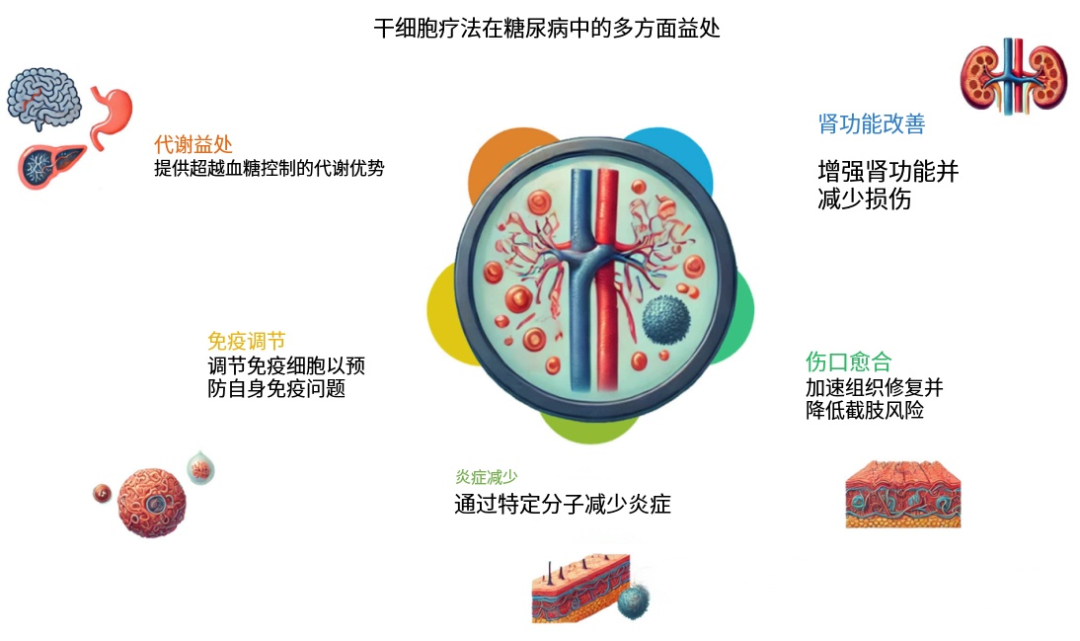
β-cell repair and regeneration
Directed differentiation: activating transcription factors such as PDX-1 and Ngn3 to become β-like cells, with glucose-stimulated insulin secretion at 78%–92% of native β cells; inducing endogenous α-to-β transdifferentiation.
Protecting survival: secreting HGF, EGF and others to inhibit β-cell apoptosis; exosomes carrying miR-375 and similar molecules that suppress apoptotic genes such as Bax, raising survival.
Improving insulin resistance and metabolic homeostasis (core for type 2 diabetes)
Raising insulin sensitivity: via the AMPK/PI3K pathway, promoting GLUT4 translocation and glucose uptake; down-regulating genes such as PEPCK, cutting hepatic glucose output by 59.7%.
Regulating fat metabolism: shifting adipose-tissue macrophages towards an anti-inflammatory phenotype, lowering TNF-α and other inflammatory factors, easing insulin resistance.
Complication prevention and paracrine effects
Repairing the microenvironment: secreting VEGF and others to promote angiogenesis and ease islet hypoxia; exosomes anti-fibrotic and anti-inflammatory, protecting the kidney and lowering diabetic-nephropathy risk.
Paracrine core: remote regulation of metabolism and immunity via exosomes and cytokines; stem cells homing to the pancreas for precise repair — the main source of efficacy.
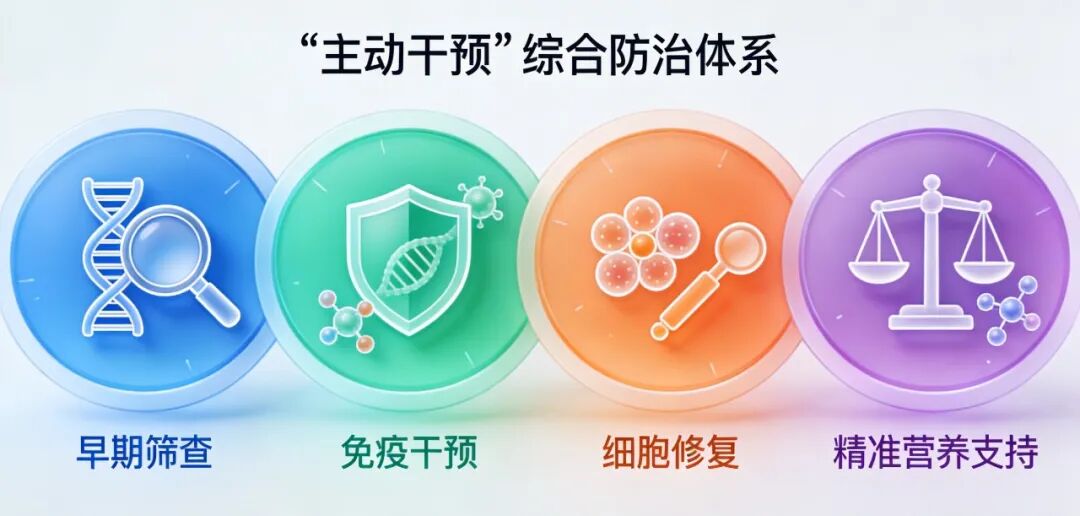
1. Technical breakthrough: it fills a gap in “root-cause treatment” of type 2 diabetes, going beyond drugs that only control glucose and cannot repair islets, and pushing diabetes care from “passive glucose control” towards an “active intervention” system of early screening, immune intervention, cell repair and precise nutritional support.
2. Industry acceleration: approval will push standardisation across the stem-cell chain — cell preparation, quality control, efficacy evaluation — and offer a replicable model for other metabolic diseases. The project’s stated aim is to serve the public with frontier technology at high quality, efficiency and scale; if validated in Lecheng, it may spread to qualified institutions nationwide.

Diabetes health management: stem-cell technology does not replace conventional health management. For people with type 2 diabetes, scientific self-management remains the basis for control. Because individuals differ, daily care still needs a precise diet (less high-sugar, high-fat, high-salt food), a personalised exercise plan, regular monitoring of glucose, blood pressure and lipids, and a stable mindset. Combining health management with standard treatment is what delays progression and lowers complication risk more effectively.
A proper care pathway: before treatment, a qualified clinician must assess fully and strictly exclude contraindications such as tumour and severe infection; after treatment, long-term follow-up is required, with close monitoring of body markers, to keep treatment safe.
Beware false claims: any organisation or individual claiming stem-cell therapy “cures all diseases”, is “absolutely safe” or “works in one injection” is false advertising and a medical scam. Patients should stay alert.
References:
Life science and genetic technology are developing rapidly. This article is compiled from publicly available educational material, for reference only, and does not constitute medical advice. For medical questions, please consult a qualified clinician.