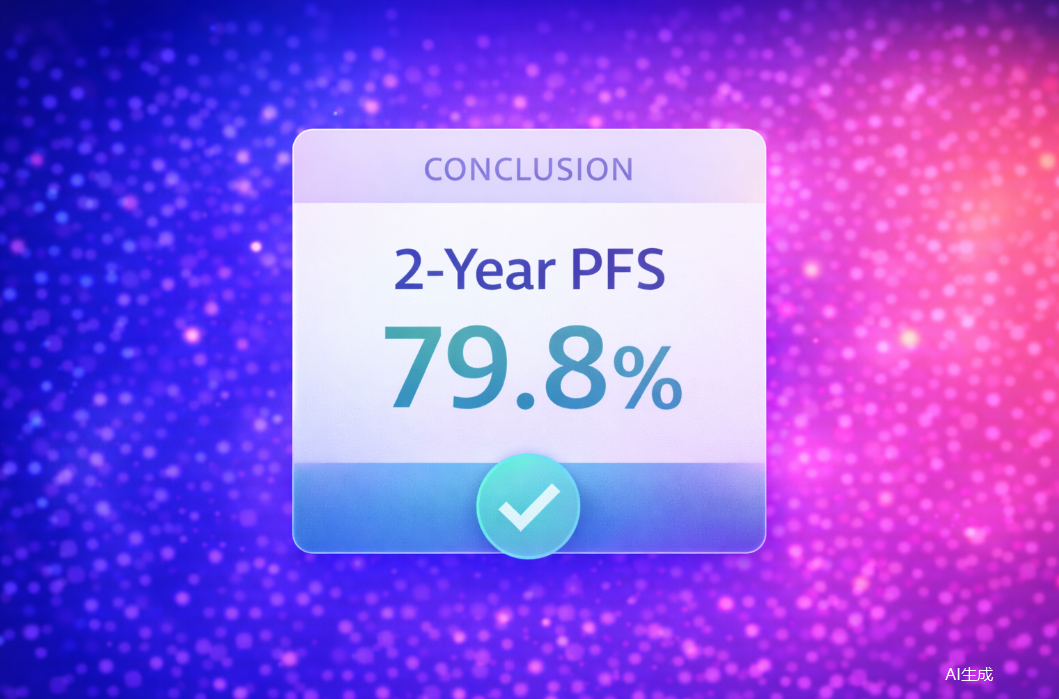
A Korean prospective study timed CIK infusion about two weeks after autologous transplant as post-remission consolidation; 2-year PFS reached 79.8%.
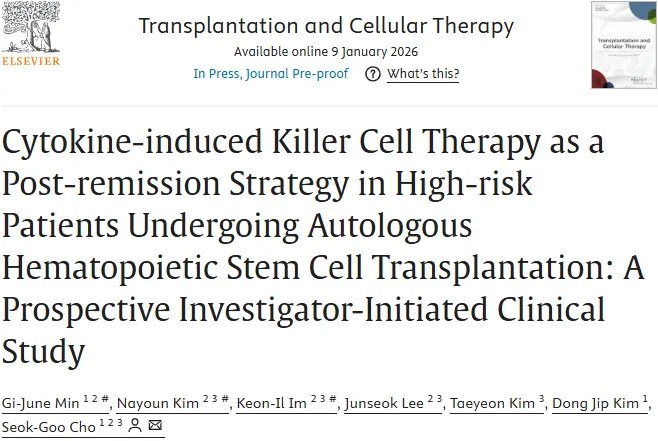
A prospective Korean study has been published online in Transplantation and Cellular Therapy, the official journal of ASTCT. Investigators timed cytokine-induced killer (CIK) cells at a critical point — about two weeks after autologous haematopoietic stem-cell transplant (ASCT) — as a post-remission consolidation strategy.
Twenty patients with high-risk non-Hodgkin lymphoma (NHL) received CIK infusion after complete remission (CR) and ASCT. The headline readout: 2-year progression-free survival (PFS) of 79.8%, with infusion reactions mainly mild fever. The path is not “one more round of high-intensity treatment”, but turning the post-transplant immune window into a more precise clearance window.
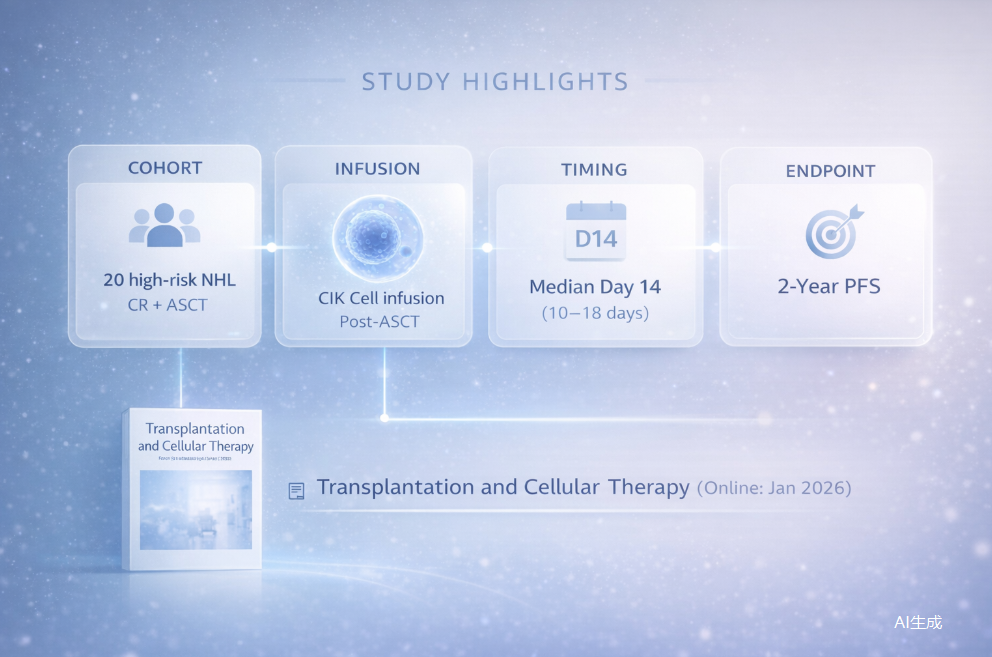
For high-risk lymphoma, ASCT is often an important consolidation path: high-dose chemotherapy drives tumour burden lower, then autologous stem cells “reboot” haematopoiesis and immunity.
Clinical reality: imaging and clinical remission do not mean zero residue. Minimal residual disease (MRD) or unseen residual cells may regain a foothold during immune reconstitution and become the start of relapse. How to press one more layer after transplant has long been among the hardest — and most worth investing in — parts of high-risk care.
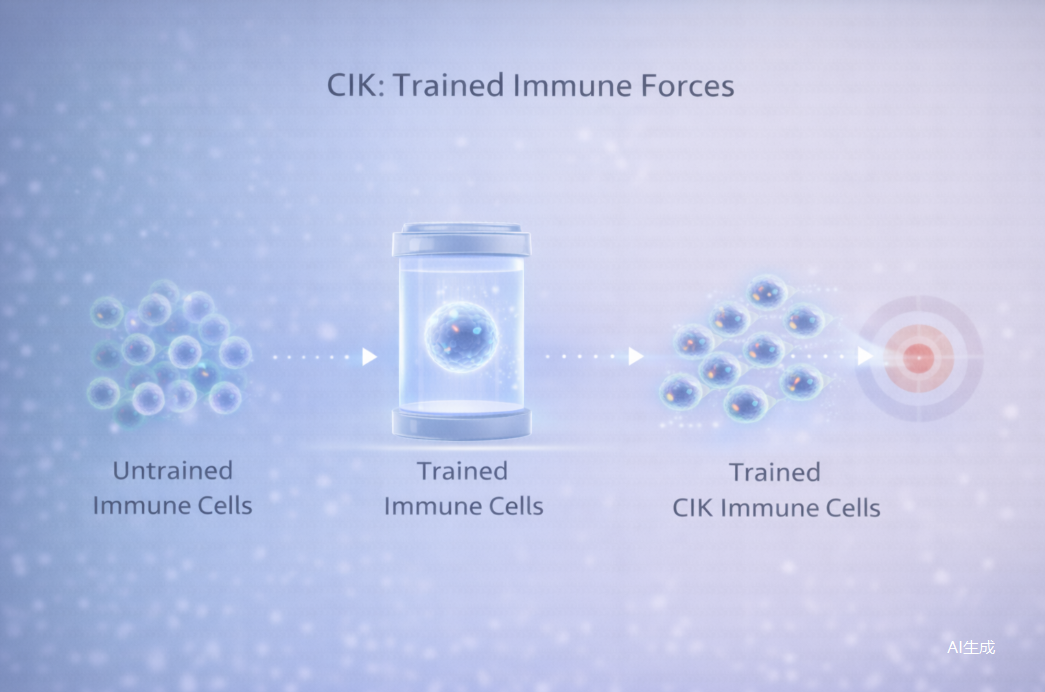
CIK cells, in one sentence, are an effector population obtained by inducing, expanding and functionally strengthening peripheral-blood immune cells with cytokines in vitro.
They are typically mixed: T-cell features (such as CD3+) plus a subset with NK-like killing (often CD3+CD56+). Mechanistically, CIK cells are often discussed as recognising stress signals via receptors such as NKG2D, and thereby killing tumour cells.
For a general reader: this is not another strong shove to the immune system, but a controllable cell team trained in advance and sent in at a critical window.
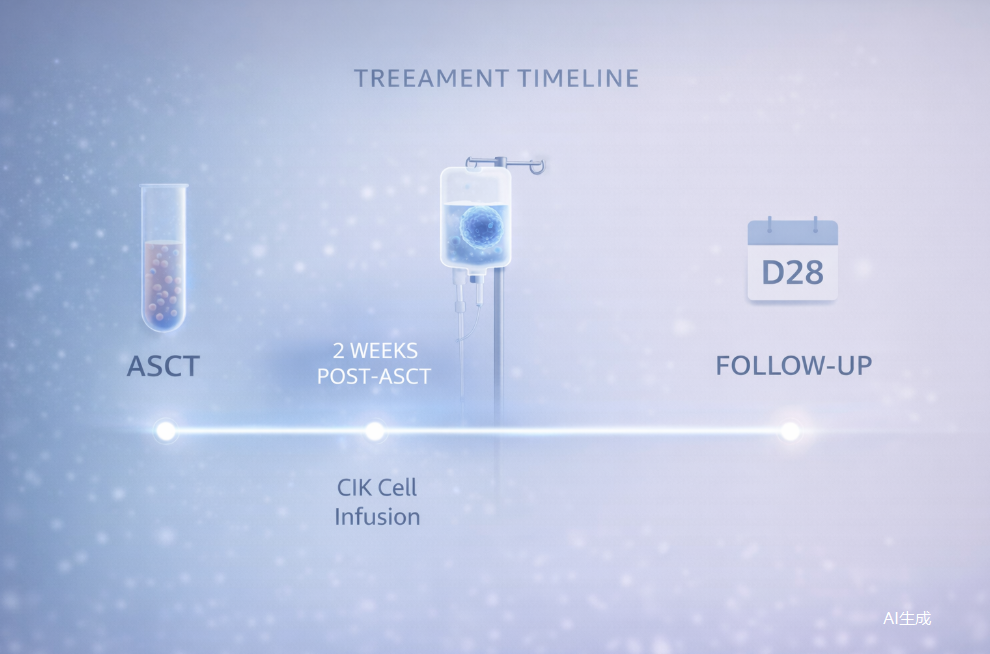
In short: CIK was not used as firefighting, but as post-remission consolidation, brought in early.
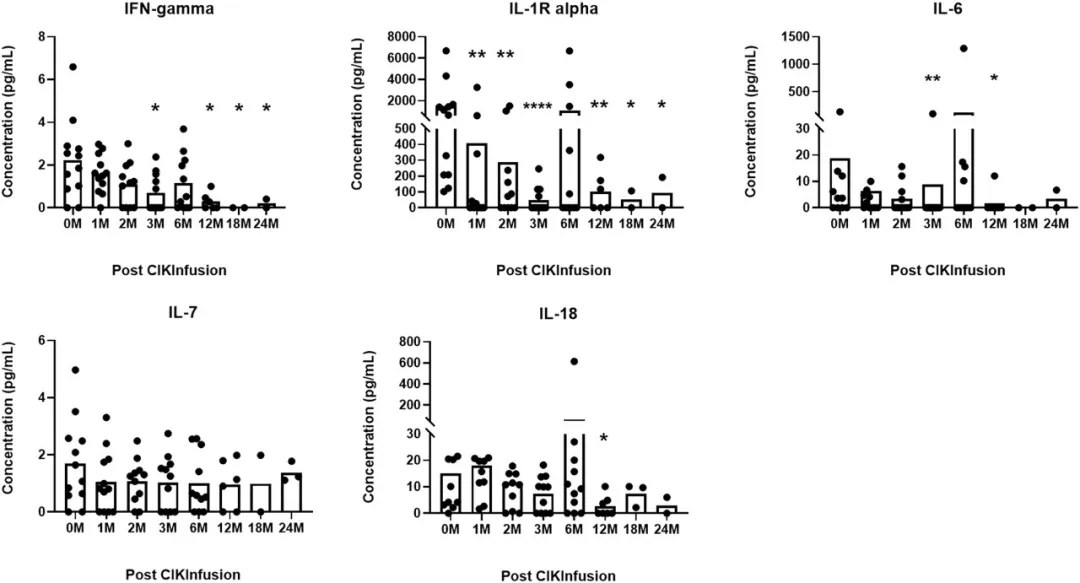
Core disclosure: 2-year PFS 79.8% (with a 95% confidence interval). Only a few patients had infusion reactions, mainly mild fever. CMV-related markers and infection were also described, with no signal of loss of control, and a hint of possible benefit for immune reconstitution.
The point for readers is not one side-effect detail, but the direction: adding CIK early after ASCT may press relapse risk down earlier and more steadily, without a large extra treatment burden.
Talk of relapse often starts after it happens. This study moves the line to before relapse.
The clinical question is closer to real practice: for high-risk patients, can a controllable, repeatable, relatively acceptable cell-immune strategy press residual risk down one more layer early after transplant? If later studies with larger samples and stricter controls repeat similar PFS/OS gains, this could become a standard module of post-transplant care for high-risk lymphoma, not a one-off exploration.
Life science and genetic technology are developing rapidly. This article is compiled from publicly available educational material, for reference only, and does not constitute medical advice. For medical questions, please consult a qualified clinician.