From treating disease to managing ageing: the shift is from one-off projects to data-driven, lifelong care that lengthens healthspan — years lived in good function.
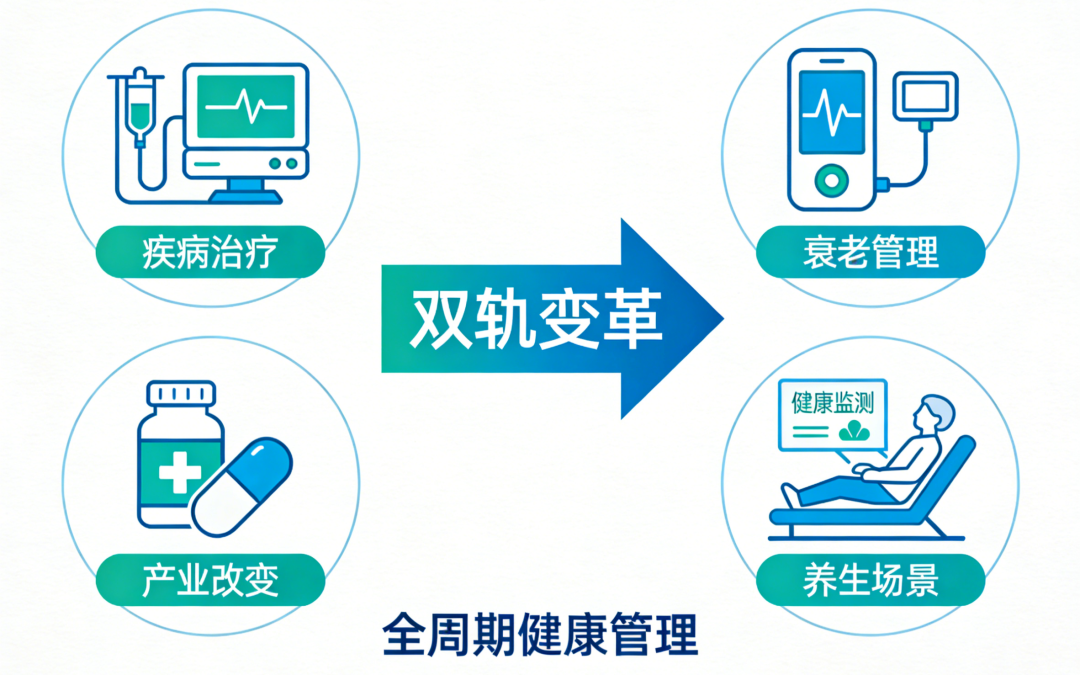
China’s longevity field is moving on two tracks — public foundations, private exploration — and the real upgrade is from one-off “project sales” to data-driven, whole-cycle health management: assess precisely, intervene continuously, and lengthen years lived in good function.
The era of “add years to life and stop there” is over. Extending healthspan is now among the most urgent questions under Healthy China. That shift forces a rethink of disease-centred care and is pulling demand toward ageing management and longevity services. The Healthy China 2030 outline and later policy have given the field a strategic frame and room to professionalise.

Geriatric care emphasises comprehensive assessment and multimorbidity, mainly after 60. Longevity medicine looks from about 30 onward, with health intervention at the centre — extending healthspan, not only treating diseases already present. Confusing the two delays action and can miss the better window for modulating ageing.
Aesthetic anti-ageing targets the surface: laxity, wrinkles, a younger-looking skin. Longevity medicine treats inner mechanisms — viscera, immunity, deeper markers — as well as the skin.
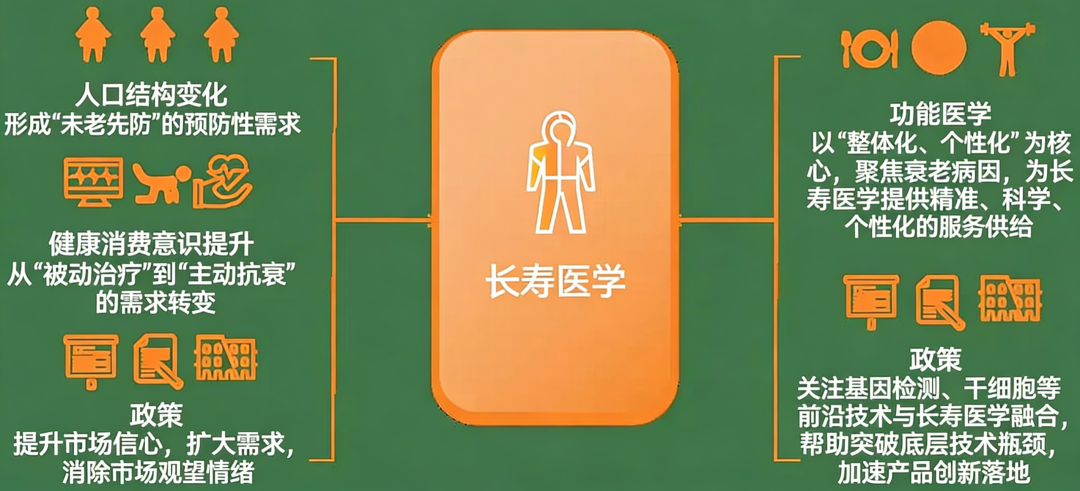
Preventive traditional Chinese medicine rests on herbal medicine, acupuncture and a classical theory of preventing disease. Longevity medicine starts from molecular accounts of cell ageing and telomeres, and draws on multi-omics, regenerative medicine and senescent-cell clearance to measure and slow ageing.
What sets the field apart is treating ageing as an object in its own right — with an ability to assess and intervene on the process that neighbouring disciplines cannot simply substitute.
Life science and genetic technology are developing rapidly. This article is compiled from publicly available educational material, for reference only, and does not constitute medical advice. For medical questions, please consult a qualified clinician.