Life expectancy in China has reached 78.6 years even as the population ages fast. The longevity pyramid runs from measurement and lifestyle up to gene editing and stem cells — infusion as a way to restock regenerative cells and ease frailty and inflammation.
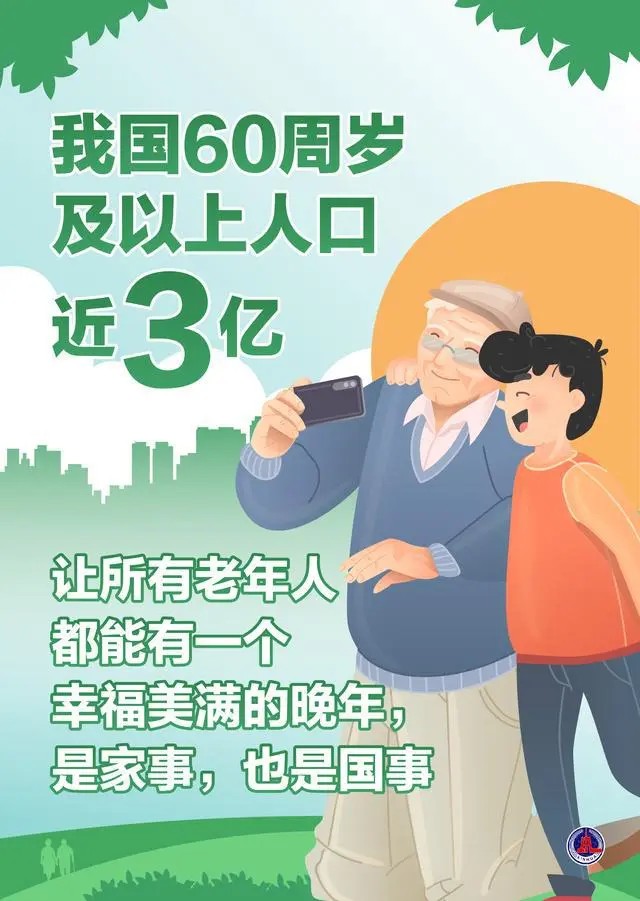
China’s statistical bulletin puts life expectancy at 78.6 years, up from about 35 at the founding of the PRC. The age structure has moved with it: by the end of 2023, 297 million people were 60 or older (21.1%) and 217 million were 65 or older (15.4%). Those 60+ are projected past 400 million around 2035 and toward 500 million around 2050. That is a moderately aged society — and, commercially, a surge of interest in staying well, including among people still in mid-career.
Strategy& (PwC) put the longevity and anti-ageing therapy market at USD 25.1 billion in 2020 and USD 44.2 billion by 2030 (about 6.1% CAGR). Because ageing sits under so many chronic diseases, some 2024 forecasts put the blend of biotech and longevity-clinic models in the trillions by 2032. Capital has followed: Calico; Altos Labs. Longevity medicine is no longer a niche slogan.
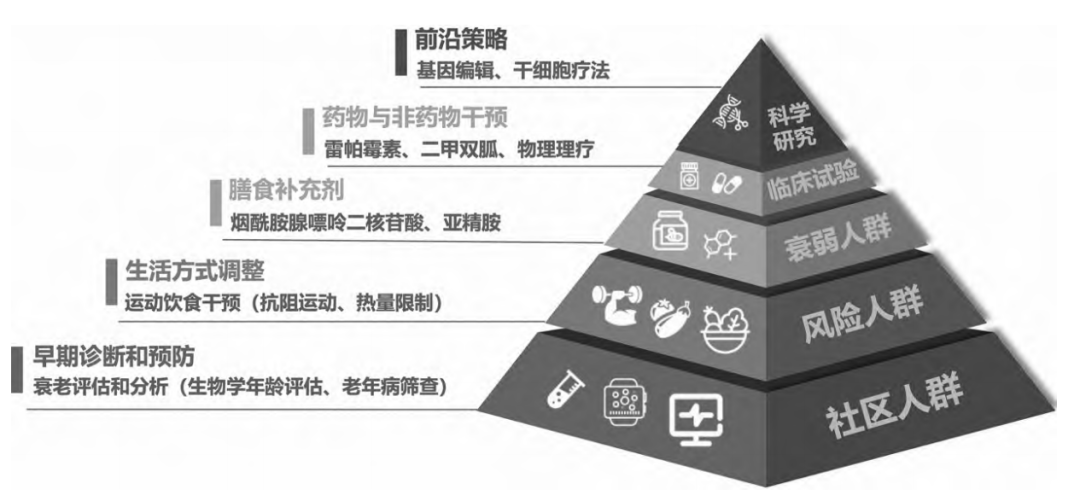
Geriatric medicine manages disease in the old. Longevity medicine tries to keep function across the whole life, with quality-adjusted health expectancy as the score. Biology, nutrition, exercise physiology and clinical medicine meet in one idea: prevent or intervene so later disease is less likely.
A “longevity pyramid” stacks the tools:
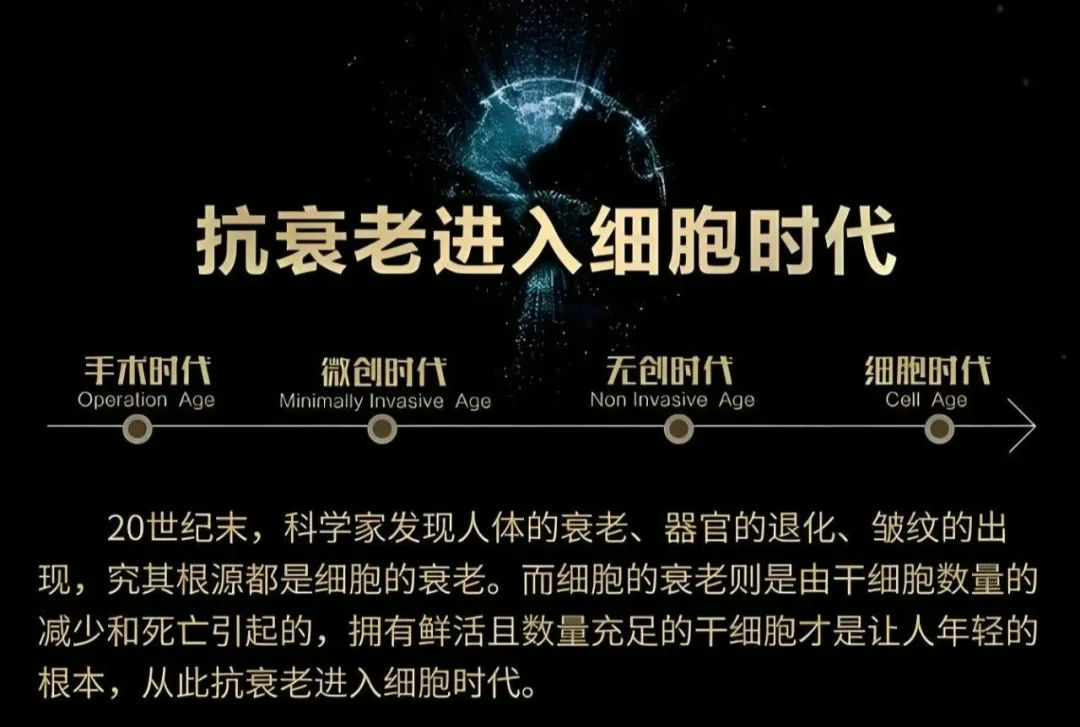
After development, every organism declines, usually with degenerative disease. Stem cells are the source stock for skin, immunity and organs. The store runs down: on the order of 6 billion at birth, about 1 billion at 25, under 300 million at 50, under 100 million at 70. When repair lags injury, the “combat losses” show as wrinkles, inflammation, weaker immunity and cognitive fade.
MSC infusion is the currently hottest clinical story: restock plus activate. Signals include slower ageing biology, lower inflammation, immune tone and skin. The 2024 Chinese geriatric consensus on drug interventions to delay ageing states that stem-cell treatment is considered an effective way to supplement regenerative cells, and that trials in older people with frailty have shown improvement in some symptoms and in inflammatory markers. Ageing need not be written as strictly irreversible; “ageing must mean disease” is the script being rewritten.
George Daley’s line still holds: if the twentieth century was the era of drugs, the twenty-first is the era of cells. Stable repair capacity is what turns extra years into extra years that still have strength.
Life science and genetic technology are developing rapidly. This article is compiled from publicly available educational material, for reference only, and does not constitute medical advice. For medical questions, please consult a qualified clinician.