They are not four equals on one shelf. The sequence is treat disease → rebalance function → repair tissue → slow ageing — different stage, goal and logic.
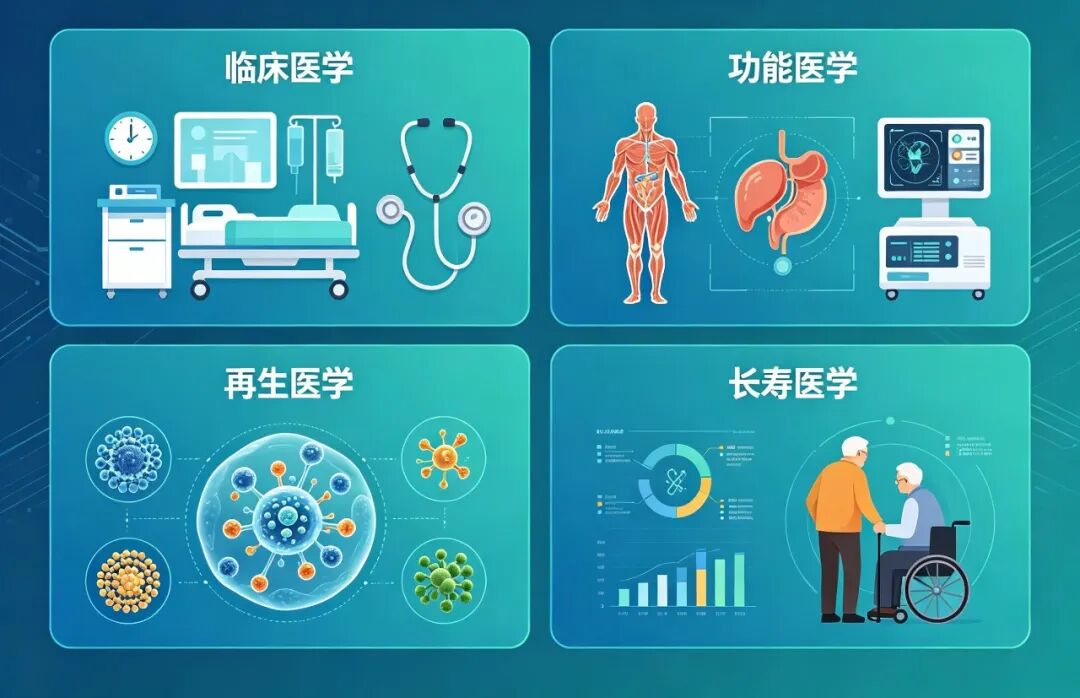
Clinical, functional, regenerative and longevity medicine are often lined up as if they were four brands of the same product. They are not. They stack: treat what has already gone wrong → rebalance function before it becomes a diagnosis → repair tissue that will not heal on its own → slow ageing so that healthspan, not only lifespan, stretches.
This is the medicine most people know. It focuses on disease that has already declared itself — hypertension, diabetes, cancer, infection. Diagnose (blood, imaging), then drugs, surgery or radiotherapy to control, relieve and, when needed, save a life.
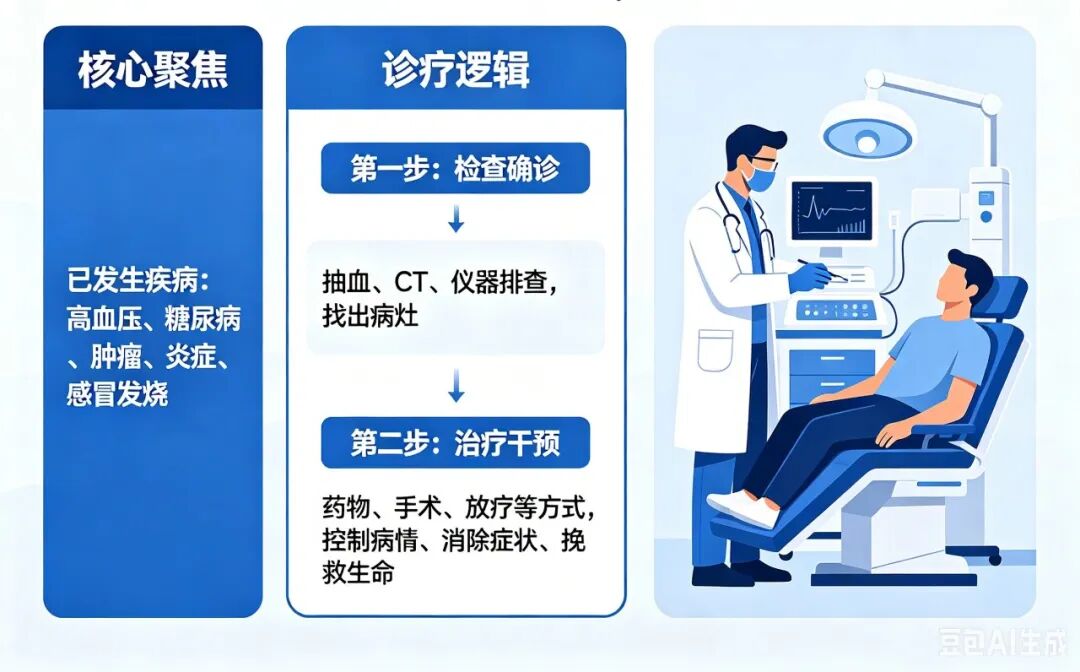
The image is the firefighter: where it burns, they go. Prevention and deep rebalancing of constitution are not its first job.
The contrast is timing. Functional medicine does not wait for a diagnostic code. Labs can be “normal” while fatigue, insomnia, bloating, mood and metabolism are not. It looks at the gut, hormones, nutrients, stress and metabolism as a network, then uses food, nutrients and lifestyle to restore balance before a small disorder becomes a named disease.
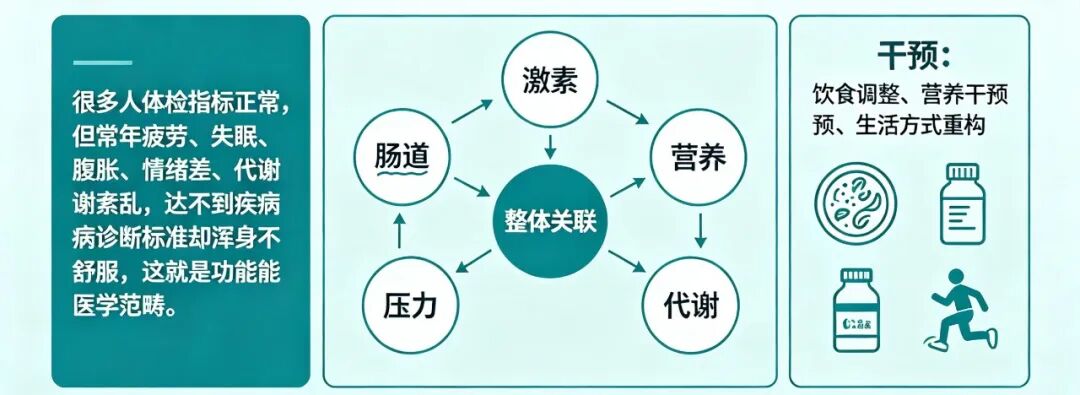
The image is the home repairer: fix the leak before the floor collapses.
This is for structural injury that pills and ordinary surgery often only maintain — spinal cord, myocardium, worn cartilage, large wounds, lost organ function. Stem cells, tissue engineering and gene tools aim to restore tissue, not merely damp symptoms.
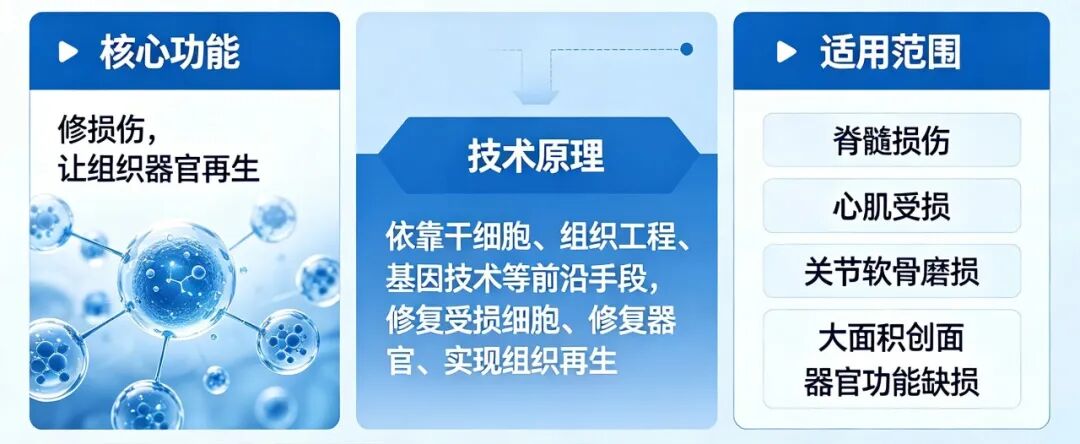
The image is a parts workshop that tries to grow the part back.
The aim is not only to treat disease or patch injury, but to slow ageing itself — genes, immunity, metabolism, cells — so that later life is not a pile-up of chronic illness. Living longer is not the point if those years are spent unwell.
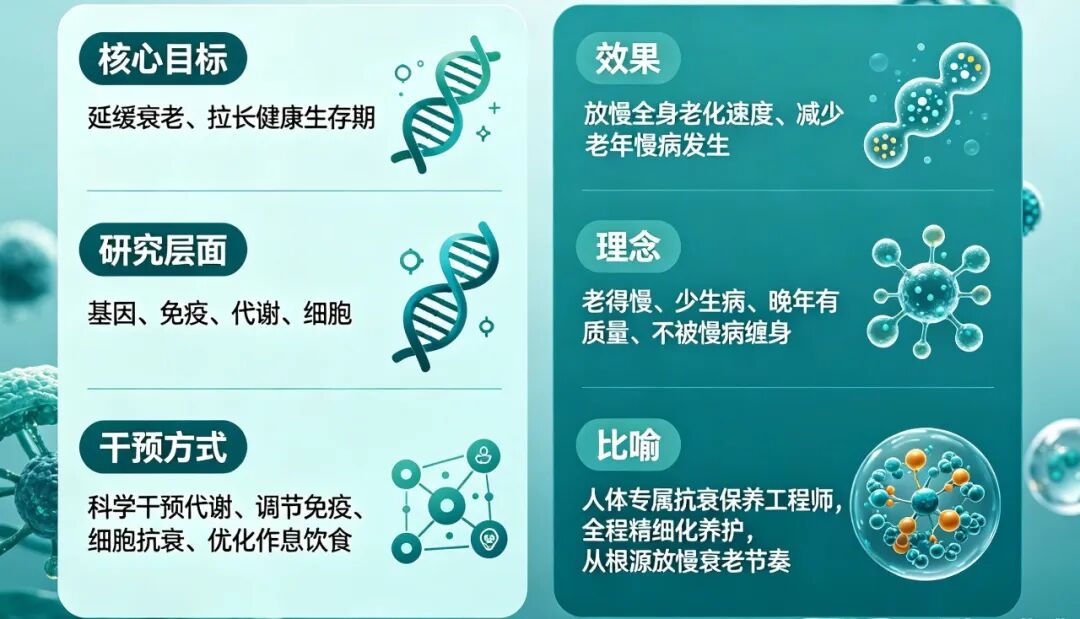
The image is a maintenance engineer for the whole organism, slowing the clock rather than waiting for the next fire.
None replaces the others. The useful question is which layer matches your age and your state now.
Life science and genetic technology are developing rapidly. This article is compiled from publicly available educational material, for reference only, and does not constitute medical advice. For medical questions, please consult a qualified clinician.